
Rings for short, slim, long or wide fingers: shape and fit
Choosing a ring is about more than its appearance in a photograph. Shape, width and open spaces change how it looks on the hand. The same lines read differently on slim, short, long or wide fingers. These pointers help you explore visual effects while letting your own taste guide the choice.
The aim is to find a design you enjoy, in the right size and comfortable as your hand moves. Finger shape is something to observe, rather than a rule deciding what you can wear.
The same ring does not look quite the same on every hand. The space it occupies between knuckles, the skin visible around a motif and how it stays in place change the impression. Take time to look at your hand at rest and then in motion: that is often when the choice becomes clearer.
Why look at your hand’s proportions?
A ring draws the eye. It highlights hand movements, catches light and can become the focal point of a combination.
Different designs can create different effects:
- create a discreet line on the hand
- suggest a more vertical direction
- connect the jewellery’s volume with the hand’s proportions
- or deliberately choose a bolder contrast
As with a clothing cut, the effect depends on proportions and the overall look. Personal preference may lead you to choose contrast rather than an understated line.
Finger length, width and ring size are different pointers
Short fingers can be slim or wide; long fingers can have prominent knuckles. You do not need to fit one category. Length helps you observe the available space along the finger, width helps compare volumes, while ring size concerns fit. Liking a shape in a photograph does not remove the need to check that fit.
Also consider the motif’s height along the finger, the band’s thickness and the spaces within the design. Openwork can cover a generous area while leaving skin visible. At a similar width, a solid band and several spaced bands do not necessarily create the same effect.

Which rings suit slim fingers?
A delicate line remains clearly visible on slim fingers. The practical priority is often finding a size that keeps the ring in place without excessive turning.
Fine, openwork or minimalist rings create a light look. A more pronounced design is still an option if you enjoy contrast: consider its width and how it sits rather than dismissing it simply because your fingers are slim.
Several fine rings can create an interesting rhythm. Start with a few pieces and check they do not slide against one another when you move your fingers.
If the ring’s top keeps turning underneath the finger, that is not only a question of visual proportions: compare the stated size and construction. A raised motif can change the design’s balance. With an open ring, do not assume it can simply be squeezed much tighter; the seller should clarify the adjustments intended for that piece.
👉 Explore our gold-tone stainless steel rings with fine designs to compare the available lines and proportions.

Rings for short fingers: which shapes should you try?
If you want a more elongated impression, look at the space the ring leaves visible between the base of the finger and the knuckle.
An oval aligned along the finger, a diagonal line or an open design can guide the eye vertically. These are styling ideas to try, rather than a real change to finger shape.
A very wide band covers more visible space. If you like that look, you can choose it; above all, check that your finger can bend comfortably.
Fine or slightly open designs are a starting point for those seeking a lighter look.
When comparing two designs, ask a specific question: do you want a line that follows the finger’s length or a volume that draws more attention? A central opening, diagonal or vertically aligned oval offers something to try. A round shape or wide ring may appeal just as much for a more graphic result. Do not decide from a close-up alone: look for a worn view and measurements.
👉 Compare shapes in our collection of gold-tone stainless steel rings
Which rings suit long fingers?
On long fingers, several bands or a generous motif can create a more graphic presence. A fine ring remains equally possible if you prefer a discreet line.
Wide rings, two- or three-band designs and fuller shapes occupy the hand differently. Consider both their height along the finger and the spaces between elements.
Flowers, waves or open circles can bring rhythm to the look. Choose the effect you enjoy rather than feeling you must visually reduce length.
 Discover the Valene ring
 Discover the Marge ring
 Discover the Janna ring
 Discover the Marielle ring
Which rings suit wide fingers or prominent knuckles?
For wide fingers, compare a design’s volume with the space it occupies on your hand, without feeling it must be as discreet as possible.
A structured ring or wider band can create a balanced presence. A fine ring may also appeal through its contrast. Width alone does not decide: design, openwork and comfort make a considerable difference.
Openwork reveals the skin and can keep a visually light feel while offering noticeable volume. If the knuckle is wider than the finger’s base, passing it over the knuckle and keeping it in place deserve particular attention when choosing the size.
Looking for rings for wide fingers often raises two questions: which look do you like, and which size should you choose? A prominent motif does not solve a fit issue, and a very fine ring is not necessarily more comfortable. Compare different widths in an appropriate size, then observe how the band sits. Openwork can change the visual impression of volume; it does not replace checking the fit over the knuckle.
Why style and comfort matter
Above all, a ring should appeal to you and remain comfortable, whatever your finger shape.
Observe how it behaves when you open your hand, bend your fingers and hold an object. The design may be attractive, but trying it in motion tells you things a photograph cannot.
Try three simple movements
Start by looking at the ring with your hand relaxed: do you like the overall result without zooming in on the finger? Then open your hand and bend your fingers naturally. Finally, repeat an everyday gesture, such as holding a pen or a bag handle. Notice whether the ring turns a lot, catches at a knuckle, presses on a neighbouring finger or snags fabric. This small practical check usefully complements the visual pointers.
If you are unsure between different constructions, trying a jeweller’s ring sizer can help clarify the size. Do not force an overly narrow ring over your finger or treat adjustable as a promise of every possible setting. Respect the design’s limits.
Read the materials and care instructions too. The metal base, finish and decorations may need different precautions; choosing the right size does not replace checking these details.
👉 Browse our selection of gold-tone stainless steel rings and check each product page’s measurements and characteristics.
👉 For more on materials, read our article
stainless steel or gold plating: understanding the differences

Can you combine several rings for your finger shape?
Yes, if you enjoy the combination and your fingers can move freely.
Stacking lets you explore different balances. For example:
- a few fine rings for a light line
- a mix of fine and more pronounced designs for contrast
- rings spread across several fingers to space out the volume
Look at the combination up close, from a distance and in motion. Visual coherence matters, but comfort is the best everyday guide.
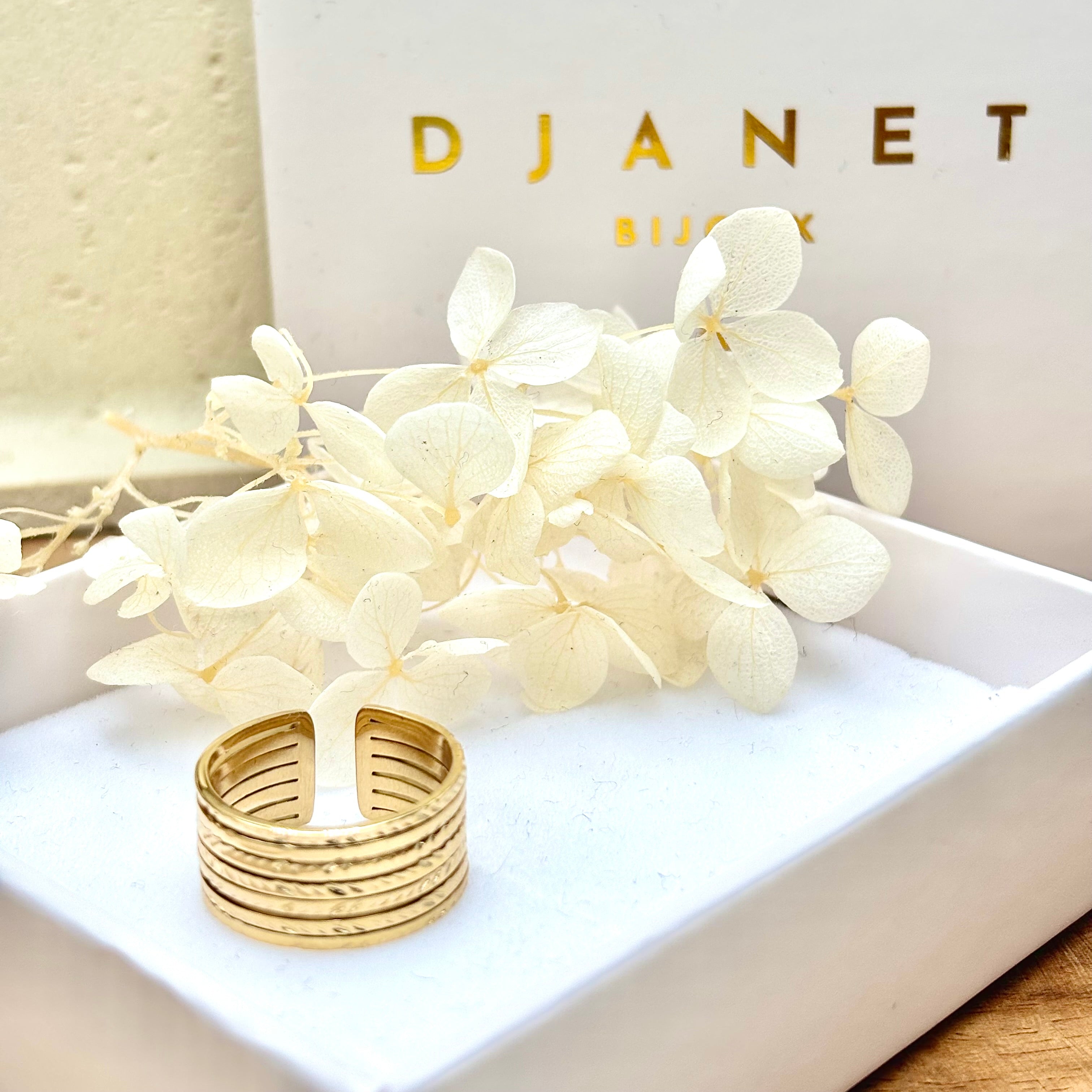
A multi-band ring can already give the impression of several pieces. Look at what it contributes before adding more bands. For texture combinations and outfit ideas, read our guide to women’s gold-tone ring styles and combinations.
Mistakes to avoid when choosing
A photograph of a ring on its own shows the design, rather than its exact appearance on your hand.
Before deciding, compare measurements, construction and any photographs showing it worn.
Some common pitfalls:
- mistaking ring width for a strict rule about short fingers
- ruling out fine or wide rings solely because of a finger-shape category
- overlooking size and everyday movements
A ring is something you wear. Its appearance when still and its comfort in motion should be considered together.
Choose a ring that feels like you
Observing your finger shape helps you understand a ring’s effects without defining one correct answer.
Compare a fine line, open shape or fuller volume, then choose what you enjoy and find comfortable. A good choice brings together your preference, size and daily hand movements.
👉 Explore our collection of gold-tone stainless steel rings
👉 Also read our guide
gold-tone steel rings: finish, resistance and everyday wear
FAQ: rings and finger shapes
How do I know which ring suits me best?
Compare several shapes on the same finger, look at the visible space around the ring and move your hand. Vertical lines, openwork and wide shapes create different effects. Your taste and comfort matter as much as these pointers.
Can anyone wear a wide ring?
A wide ring can appeal on very different hands. Its height, opening and size affect how it wears. Compare the actual design rather than deciding only by finger length or width.
Can you wear several rings on short fingers?
Yes. Try spreading pieces over several fingers and leaving spaces. Fine designs offer a light starting point; a more pronounced piece is still possible if it does not hinder movement.
Does finger shape really matter?
It influences appearance but is only one factor. The same person may enjoy very different effects depending on outfit and occasion. The right size and enjoyment of wearing the piece remain essential.