

Stainless steel or gold-plated jewellery: how to choose
Stainless steel or gold-plated jewellery: which should you choose? Start with the type of jewellery you want to wear and your habits. A fine necklace, a bracelet next to a watch and voluminous earrings raise different questions of comfort and care.
Next, distinguish the base metal from its finish. Here is a way to compare pieces and find a shape you will enjoy wearing.
When two gold-tone necklaces look similar, it is tempting to want one word to settle the choice. Yet the more useful question is often: which one suits the way I wear jewellery? A piece you put on every morning is not chosen in quite the same way as one kept for occasions. Material is part of the answer, but it does not tell the whole story.
Understand the terms before comparing
Stainless steel is a base metal belonging to a family of corrosion-resistant alloys. Gold plating describes a layer of gold applied to a base. The categories are not mutually exclusive: steel jewellery can have a coating too.
For our gold-tone designs, our general description is premium gold-tone stainless steel with a PVD finish. Check the composition stated for each design. PVD describes a thin-coating deposition process; it does not, on its own, establish the coating’s composition or gold content.
Read our complete stainless steel jewellery guide for more detail. A gold-tone colour does not automatically mean that a piece is solid gold.
To read a description clearly, think in three layers: what forms the jewellery, what gives it colour and what decorates it. “Stainless steel”, “gold-tone PVD finish” and “mother of pearl” answer three different questions. Finding them on the same product page is not contradictory; together, they help explain the whole piece.
What to look for on a product page
- Composition: base metal, stated finish, stones and other decorative elements.
- Dimensions: chain length, motif volume, band width or bracelet size.
- Construction: fastening type, any extension and adjustment options.
- Care: methods suitable for every component of the design.
For gold-plated jewellery, read the available specifications for the plating and its base. For a gold-tone PVD design, look for a precise description too. A process name alone cannot replace information about the individual piece.
Imagine two bracelets: one is described only as “gold-tone”, while the other specifies the base, dimensions, fastening and ornaments. The second description gives you more points for deciding, without proving on its own that the piece will last longer. If an important detail is missing, ask for it rather than filling the gap with an assumption.
Words such as “resistant” or “durable” are more useful alongside practical care advice. Resistance to occasional contact does not promise the same appearance after repeated swimming. A useful description should help you understand how to wear and preserve the piece, not simply enjoy its appearance.
How does the type of jewellery affect your choice?
| Jewellery | What to compare first | A useful habit |
|---|---|---|
| Necklace | Length, pendant weight, clasp and ornaments. | Put it on after perfume and avoid chains becoming tangled. |
| Bracelet | Dimensions, fastening and possible interference with a watch. | Limit rubbing against a desk and other bracelets. |
| Ring | Width, raised details and comfort when moving the fingers. | Take it off for manual tasks that expose the jewellery. |
| Earrings | Dimensions, weight where stated and fastening type. | Avoid catching on clothing and hair. |
For a necklace worn regularly
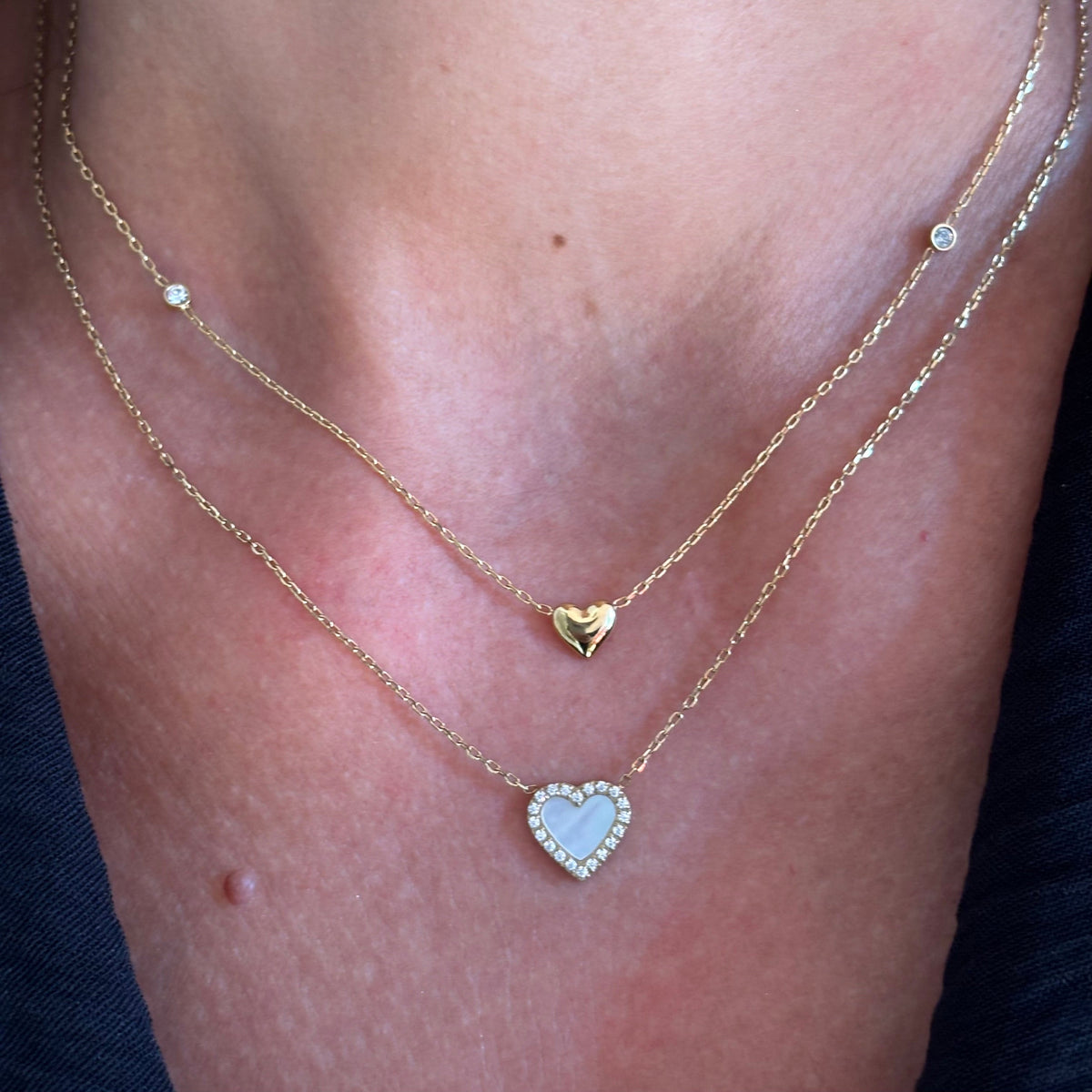
A suitable length and practical clasp can matter as much as the finish. If you enjoy layering, leave space between pendants and check that the chains do not continually rub together. Explore our gold-tone stainless steel necklaces to compare shapes.
For a bracelet
A rigid bangle and a fine chain are worn differently. Check the internal measurements or length and how the fastening works. Material alone does not make a bracelet adjustable. Explore the designs in our gold-tone bracelet collection.
For a ring or earrings
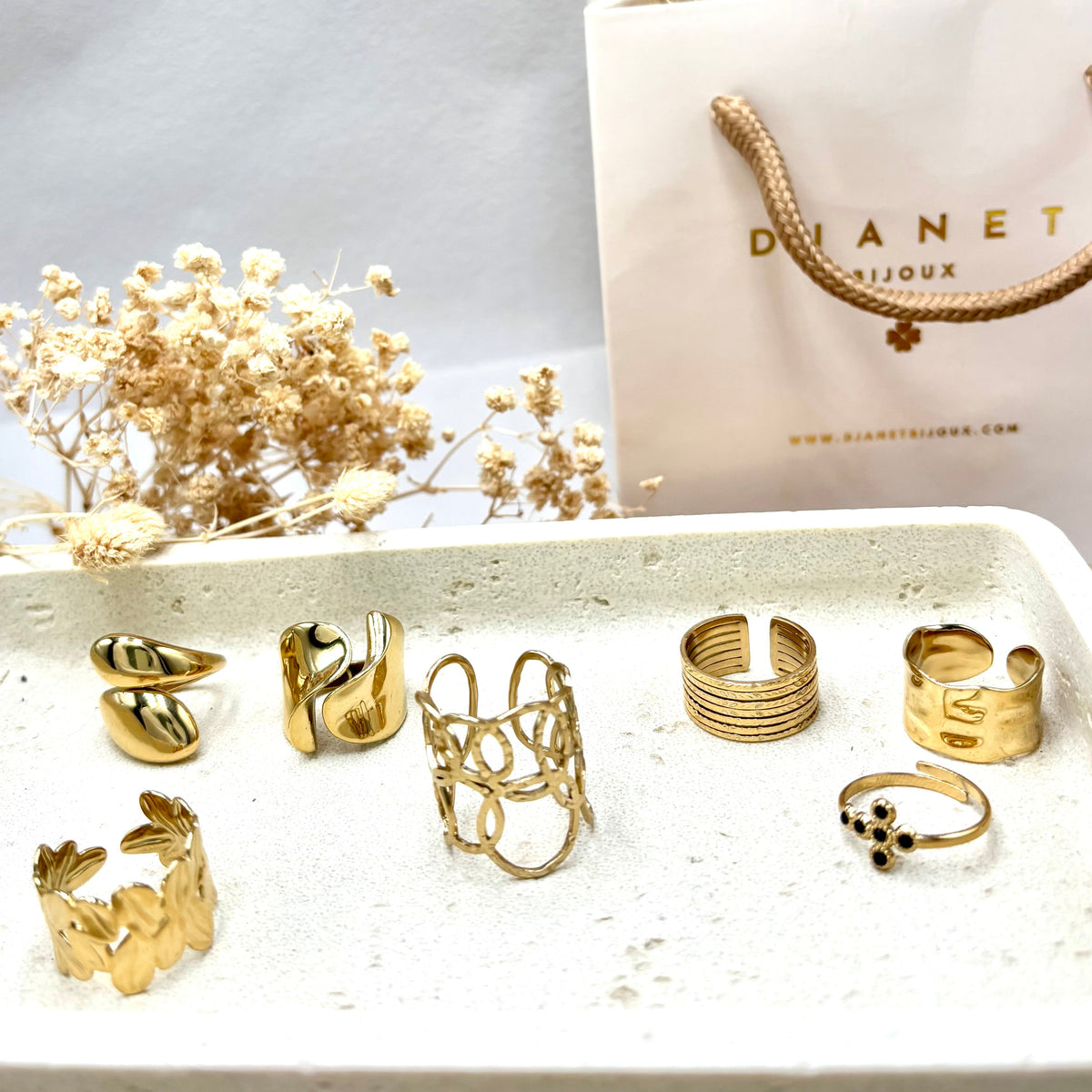
Our rings are adjustable, but the design should still feel comfortable on your finger without forced or repeated adjustments. Our comparison of stainless steel and gold-plated rings explores the particular demands of jewellery worn on the hand.
For earrings, consider the weight you feel, their volume and fastening. Neither the metal’s name nor the motif’s apparent size is enough to predict comfort.
How long will the colour last?
A surface finish can change with rubbing, care and the products it encounters. A corrosion-resistant steel base does not guarantee a permanent gold-tone colour. Likewise, gold-plated pieces do not all have identical specifications.
A dull appearance may come from dirt; a worn layer is a different issue. Cleaning cannot recreate the coating. Avoid comparing lifespans from category names or shades of yellow alone.
Consider where the jewellery will encounter wear too. A chain resting on soft fabric, a ring accompanying hand movements and a bracelet touching a watch experience different rubbing. Two pieces with the same stated finish can therefore change differently. Compare the use you have in mind rather than looking for one lifespan for an entire category.
Water and care: consider the whole piece
Remove jewellery before showering, swimming, sport and household tasks. Mother of pearl, pearls, gemstones, cords or glued elements can change the precautions needed, even if the base metal resists water.
Use a soft cloth, avoid acids and abrasives on gold-tone finishes, and store pieces separately. For a suitable method, see our stainless steel jewellery care guide. Neither description means that no care is needed.
Budget, gifts and composition
Compare the price with the specifications: dimensions, construction, ornaments and any personalisation. A finish or higher price does not, on its own, determine comfort or useful life.
For a gift, notice the motifs and proportions the recipient already wears. If a metal allergy is known, ask for the available information about the design: a general description does not guarantee freedom from individual reactions.
For a gift, start with a detail you know: does the person wear fine chains, discreet earrings or a bracelet that draws attention? Then check the design’s comfort and precautions. A personal gift does not depend only on a metal’s name or the price; it also reflects attention to the recipient’s habits.
Frequently asked questions
Can steel jewellery have a gold-tone coating?
Yes. The base metal and finish are different specifications. A gold-tone PVD finish is one example.
Can you keep gold-tone jewellery on in water?
To preserve it, take it off before showering or swimming and follow the design’s instructions, including those for its ornaments.
Which finish lasts longest?
Compare the actual specifications and conditions of use. The words “steel” or “gold-plated” alone cannot rank every piece of jewellery.
Does a bright yellow colour mean poor quality?
Not on its own. Shade is also part of the intended appearance; it does not establish composition or resistance.
Where should you start when choosing?
Choose the type of jewellery, check its dimensions and composition, then make sure its care instructions fit your habits.
Explore our necklaces, bracelets and gold-tone stainless steel rings and compare each design on its own specifications.