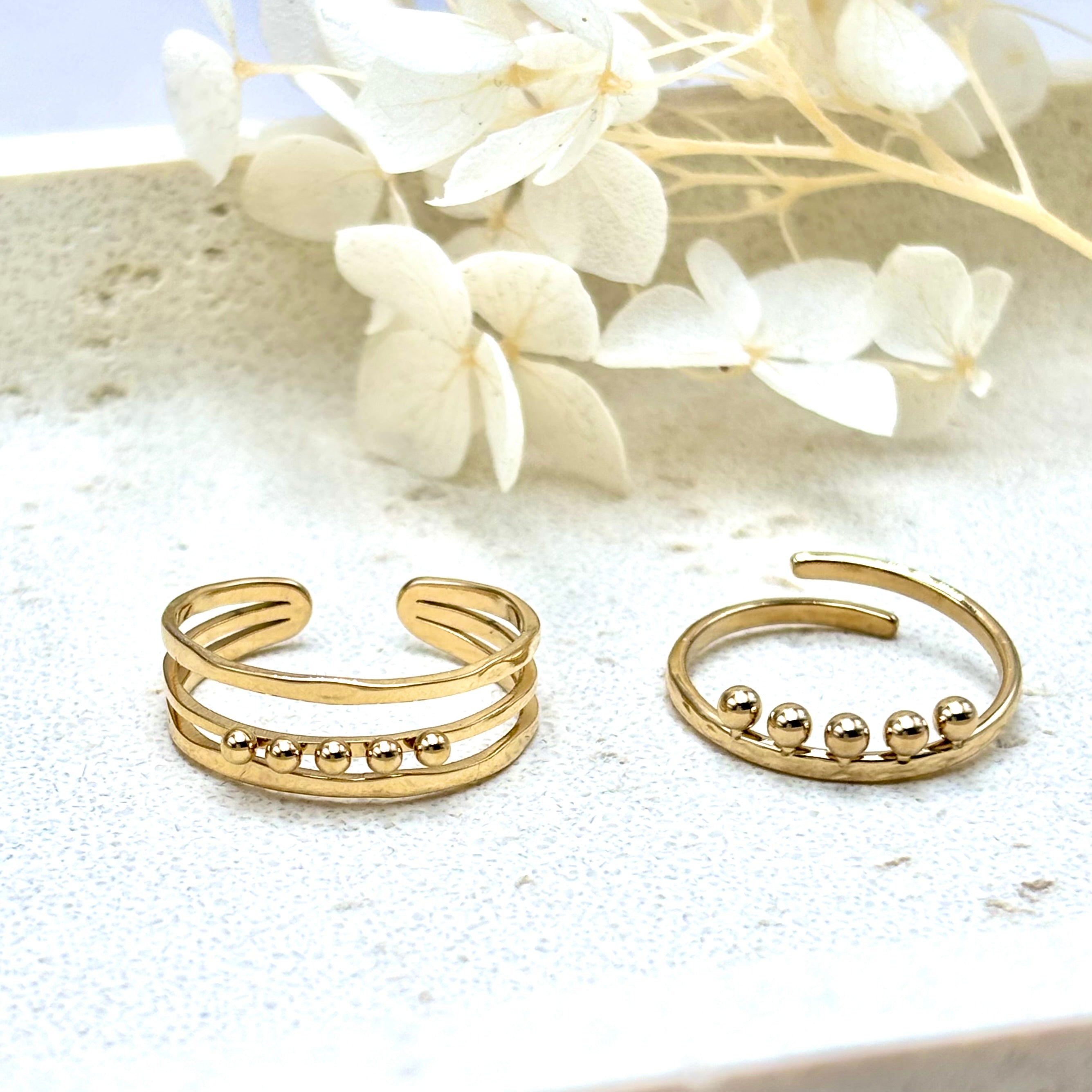

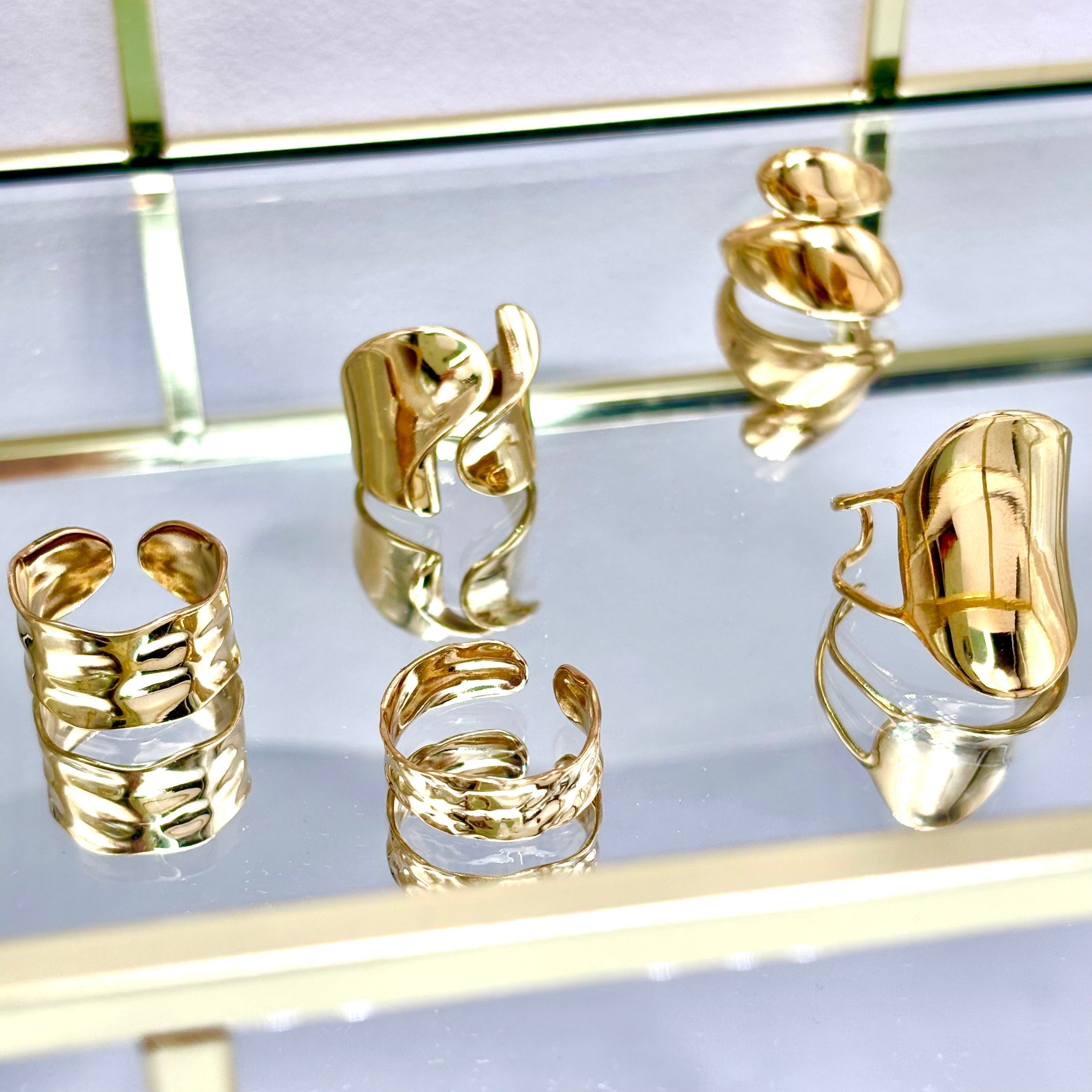
Stainless steel or gold-plated rings: which lasts best?
Choosing between a stainless steel ring and a gold-plated ring is an important step when you want jewellery that is elegant, resilient and suitable for everyday wear.
Both types of jewellery can have an appealing gold colour. To compare them, however, you need to distinguish the base metal from its finish, particularly for a gold-tone steel ring worn every day.
Unlike a necklace or earrings, a ring is constantly exposed to friction, water and everyday products. The choice of material therefore matters even more.
👉 For a broader comparison covering all types of jewellery, read our complete guide to stainless steel vs gold-plated jewellery.


Why can a ring wear faster than other jewellery?
A ring accompanies almost every movement of your hand. Its inner surface touches the objects you hold, while raised details may catch on fabric or come into contact with another piece of jewellery.
It comes into direct contact with:
- surfaces such as keyboards, tables and objects
- water when washing your hands or washing up
- products such as soap, hand sanitiser and hand cream
As a result, exposed areas can wear more quickly than those on a necklace or earrings. The design and your habits matter just as much as the material name.
This is why choosing between a gold-tone stainless steel ring and a gold-plated ring deserves careful thought.
Stainless steel or gold-plated rings: what is the difference?
A stainless steel ring has a steel base valued for its corrosion resistance. In its natural colour, the metal is silver-toned. A gold-tone steel ring has a surface finish: the strength of the base and the durability of the colour are therefore separate considerations.
A gold-plated ring consists of a metal covered with a layer of gold. Check the base metal and the characteristics of the plating. This layer can deteriorate over time, particularly with repeated friction.
For a ring worn daily, this distinction is essential: “stainless steel” describes the base, while “gold-plated” describes a finish. The terms alone cannot establish a lifespan or prove that one category is always superior.


Stainless steel rings: a resilient base for lasting wear
Water resistance: distinguish the metal from the finish
A stainless steel ring provides a resilient base for ordinary wear. Its gold-coloured finish and any decorative elements still need protection.
Here are the contacts to consider:
- water: wipe the ring after splashes and avoid prolonged immersion
- perspiration: clean gently, then dry the jewellery after wearing it
- everyday products: avoid direct contact with detergents, perfume and abrasives
These simple habits help preserve its appearance. Removing your ring before swimming, cleaning or washing up remains a good habit, even when its base metal resists corrosion well.
Resistance to friction and knocks
Rings are exposed to frequent small knocks.
Stainless steel provides a robust base, but it is not scratchproof. Repeated rubbing against a handle, another ring or a rough surface can mark the metal or its coating.
How the finish lasts over time
Steel's resistance comes from the metal itself and its protective passive layer. Its gold colour, however, depends on an added finish. PVD describes a coating deposition process; it does not automatically mean solid gold or a specified gold content.
A gold-tone stainless steel ring can retain an attractive shine with suitable wear and care. To assess a design, examine its finish information and the seller's recommendations, without confusing lasting colour with permanent colour.
👉 Explore our collection of gold-tone stainless steel rings

Gold-plated rings: elegance and care when wearing them
Gold plating appeals through its warm colour and range of finishes. Its appearance depends in particular on the colour of the deposited gold and the surface treatment: polished, satin or textured.
For a ring worn regularly, however, there are some limitations to consider.
Gradual wear
The gold layer can wear away through friction, especially on the most exposed parts of the band. Deposit thickness, adhesion, manufacturing and frequency of wear influence how it changes. Two plated rings will not necessarily age in the same way.
Sensitivity to water and products
Soaps, cosmetics and some cleaning products can change the surface appearance or leave deposits. To preserve the gold plating, follow the model's own care instructions and avoid leaving it to soak.
Regular, gentle care
To preserve a gold-plated ring, it is often necessary to:
- remove it before washing
- avoid chemicals
- limit friction
These precautions take a little attention, but are easy to make part of a routine. They also help with gold-tone steel rings: the base metal does not make the coating immune to wear.
Lifespan: stainless steel vs gold-plated rings
In practice:
- a gold-tone stainless steel ring can suit regular wear, provided its finish and any decorative elements are treated with care
- a gold-plated ring can also last with suitable care; its durability depends on the plating characteristics and the conditions in which it is worn
Your choice therefore depends directly on your lifestyle. Without comparative testing on the designs concerned, stating a lifespan in years or claiming that one category will always last longer would be misleading. Compare the stated composition, finish and recommended care instead.
What about sensitive skin?
Comfort depends on the complete piece, its composition and your individual sensitivity. Some stainless steels contain nickel: the material name does not mean “nickel-free” or guarantee universal tolerance. A gold-coloured finish alone also tells you little about substances that may be released in contact with skin. If you have a known allergy, ask for the available information about the model before choosing it.
👉 To learn more, read our article on stainless steel jewellery and allergies: nickel, lead and cadmium.


Mistakes to avoid when choosing a ring
Many customers make these mistakes:
- choosing solely for its appearance
- underestimating the effects of water and friction
- assuming all gold-coloured jewellery is equivalent
- not adapting their choice to their lifestyle
A women's stainless steel ring should be chosen for how you will actually use it. Consider the band width, raised details and comfort between your fingers too. A ring you love should remain comfortable when you write, hold a bag or close your hand.
Which choice suits your lifestyle?
If you are:
- active
- often in contact with water
- looking for jewellery that is easy to care for
A stainless steel ring can be a sensible choice. If your activities often expose your hands to water or products, however, plan to remove it during those tasks: no decorative finish replaces that precaution.
If you are looking for:
- jewellery for occasional wear
- a finish whose colour and craftsmanship particularly appeal to you
Gold plating may suit you. For occasional wear, prioritise a well-described, comfortable design that you can store separately. A ring's elegance also comes from its proportions and the way it complements your style.
Conclusion: stainless steel or gold plating for a ring?
For an everyday ring, stainless steel offers an appealing base through its robustness and corrosion resistance. Gold plating remains an option worth considering, depending on the quality of the design and your habits. The comparison becomes useful when it concerns specific pieces.
Choosing a gold-tone stainless steel ring means enjoying a style while checking its finish, comfort and care. Take time to read these details: they will help you more than a promise of unlimited resistance.
👉 Explore our collection of gold-tone stainless steel rings
👉 Read our complete stainless steel jewellery guide
FAQs: stainless steel or gold-plated rings
Can a stainless steel ring rust?
Stainless steel resists corrosion, but it is not invulnerable. The metal grade, products it encounters and exposure conditions all matter. The resistance of the base also does not guarantee that its gold-coloured finish will remain intact.
Does gold plating last?
Durability depends on the plating, manufacturing, friction and care. A gold layer can wear, particularly on parts of the ring that touch objects. No single lifespan applies to every design.
Which ring should you choose for everyday wear?
A stainless steel ring can suit everyday wear thanks to its resilient base. Compare the complete design, however: finish, width, raised details, fit and care when wearing it. Comfortable jewellery that suits your routine will be easier to preserve.